

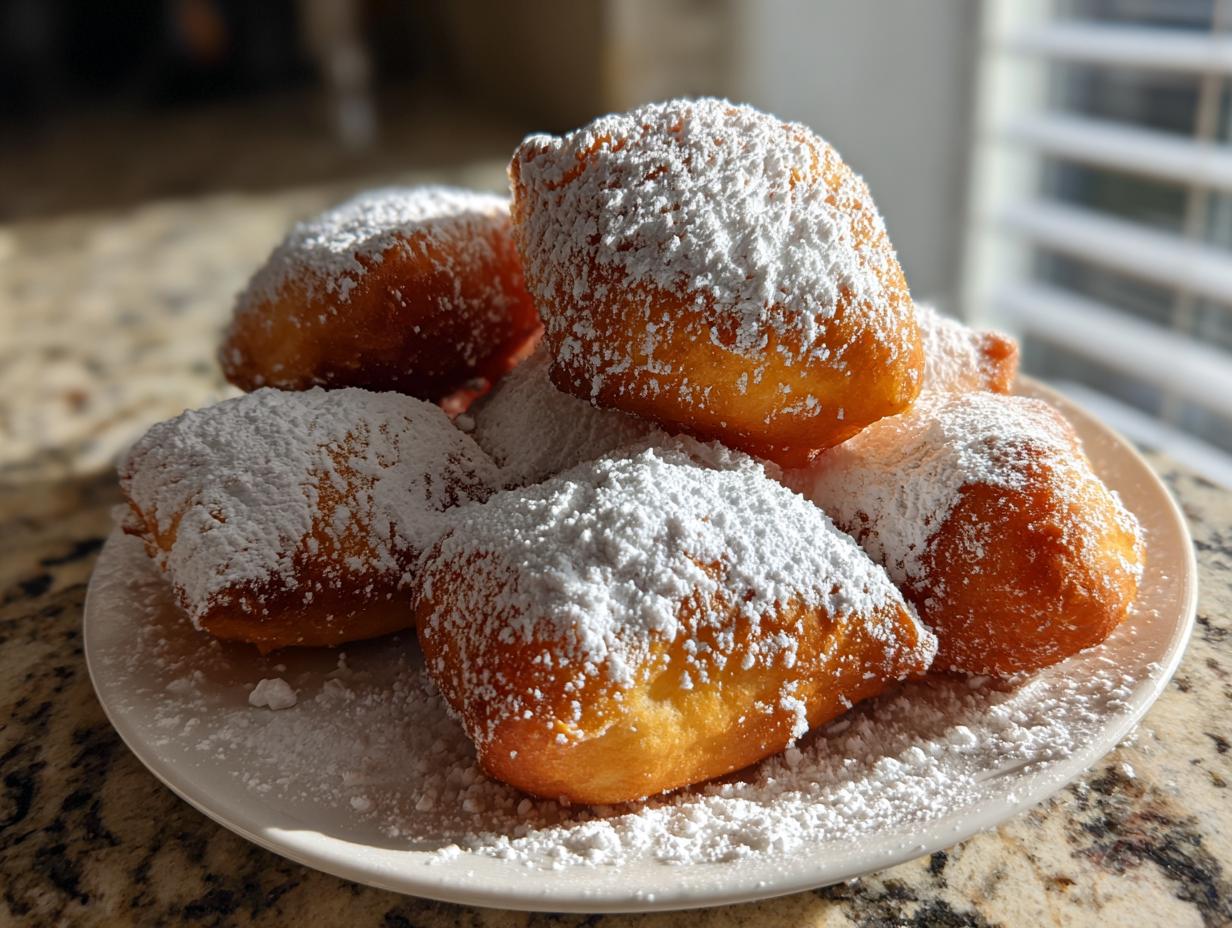
There is absolutely nothing that compares to biting into a square of hot, airy fried dough dusted heavily with powdered sugar. It just transports you, doesn’t it? For years, making those authentic, melt-in-your-mouth vanilla french beignets seemed like something reserved only for those lazy mornings wandering through the French Quarter. Well, I’m here to tell you that’s just not true! I developed this recipe after spending time understanding how yeast dough reacts under professional heat, and I promise you, we’re making a batch that is genuinely foolproof. Jade Carter’s goal, which you can read more about on our site, is always to take those intimidating classics and make them accessible, and these fluffy pillows are proof that you can master amazing homemade French cafe treats right in your own kitchen.
- Why You Will Make These Vanilla French Beignets Again and Again
- Essential Ingredients for Perfect Vanilla French Beignets
- Step-by-Step Guide to Making the Sweet Yeast Dough Tutorial
- The Technique for Authentic Deep Fried Pastry Puffs
- Finishing Your Vanilla French Beignets with Powdered Sugar
- Tips for Success When Making Classic French Beignet Recipe
- Serving Suggestions for Homemade French Cafe Treats
- Storage and Reheating Instructions for Your Vanilla French Beignets
- Frequently Asked Questions About Making Beignets
- Estimated Nutritional Data for This Dessert
- Share Your Puffy Creations
Why You Will Make These Vanilla French Beignets Again and Again
I know you’ve seen recipes that promise the world, but I want you to trust me on this one. This method focuses on getting that essential lift and that beautiful soft structure every single time. We cut out the guesswork so you can focus on enjoying the process!
- Truly Pillowy Texture: We nail the balance of fat and liquid, guaranteeing that airy interior that collapses perfectly the moment you bite into it. Say goodbye to dense, bready squares!
- Serious Vanilla Punch: I use a full teaspoon of high-quality extract, and I even offer a tip later on if you want to intensify that sweet, comforting vanilla note even further.
- Technique Over Equipment: You don’t need any fancy mixers or specialized tools; just a bowl and a good wooden spoon get you 90% of the way there.
- Satisfyingly Easy Yeast Work: The process of proofing is explained step-by-step, making this an excellent entry point if you’ve been nervous about working with yeast dough.
- Reliable Deep Frying: We cover the exact temperature sweet spot, ensuring your pastries puff up beautifully and aren’t swimming in grease when they come out of the oil.
- Perfect for Weekend Mornings: They cook fast once the dough is ready, making this an achievable, impressive treat when company drops by unexpectedly.
- Classic Presentation: They look exactly like the ones you see in those famous New Orleans shops—just waiting for that huge cloud of powdered sugar!
Essential Ingredients for Perfect Vanilla French Beignets
When we are aiming for that authentic, light-as-air texture, ingredient quality really matters. I’ve listed everything you need below. Don’t sweat the list, though; it’s mostly pantry staples! The one thing I insist you don’t skimp on is the vanilla extract. Since this is one of the main flavors we are highlighting, a pure extract makes a huge difference compared to that imitation stuff. Trust me, your taste buds will thank you!
Dough Components for Your Vanilla French Beignets
- 1 cup warm milk (Make sure it’s between 105–115°F. Too hot, and we kill our yeast; too cool, and it takes forever!)
- 2 1/4 teaspoons active dry yeast
- 1/4 cup granulated sugar (We split this up for the yeast and the main dough)
- 1 large egg, room temperature (This helps it incorporate smoothly!)
- 1/4 cup unsalted butter, melted and cooled slightly
- 1 teaspoon pure vanilla extract (Go for the good stuff here!)
- 3 cups all-purpose flour, plus more for dusting
- 1/2 teaspoon salt
Frying Medium and Finishing Touches
For frying, stick to a neutral oil with a high smoke point. Vegetable oil is perfect and accessible. You’ll need enough to cover 2 to 3 inches in your pot.
- Vegetable oil, for deep frying
- Powdered sugar, for dusting (And be generous—we aren’t shy with the sugar on these pastries!)
Step-by-Step Guide to Making the Sweet Yeast Dough Tutorial
Alright, listen up! This is where we build the foundation for that glorious puff. Making yeast dough at home used to scare me to death, but in the test kitchen, I learned that temperature control and patience are the only secrets. If you follow this sweet yeast dough tutorial precisely, we aren’t going to get those flat, sad squares. We are aiming for maximum air pockets! We mix the wet ingredients first, making sure the yeast is happy, and then we slowly introduce the flour.
Activating Yeast and Mixing Wet Ingredients for Vanilla French Beignets
First things first: get that milk warmed up. It needs to be in that sweet spot between 105°F and 115°F. Pour it into a big bowl, sprinkle that yeast right on top along with one teaspoon of your sugar, and just let it sit. If it’s foamy in about five to ten minutes, you are good to go! That means your yeast is healthy and ready to work hard for us. Then, whisk in the rest of your sugar, your room-temperature egg, that cooled melted butter, and the vanilla extract. This is the liquid base we need for perfect vanilla french beignets.
Kneading and Proofing for Light and Airy Fried Dough
Now, in a separate bowl, just quickly whisk the flour and salt together. Gently add the dry stuff to the wet mixture until it looks kind of messy. Then, turn it out onto your counter! Knead it for about five to seven minutes. It needs to feel smooth and elastic when you’re done, but don’t panic if it feels a little sticky. That stickiness is actually a good sign of hydration! Pop it into a lightly oiled bowl, cover it up, and let it proof for at least an hour up to an hour and a half in a warm spot. When it doubles, we are ready for the next step, which you can read more about here: homemade dinner rolls soft from scratch.
The Technique for Authentic Deep Fried Pastry Puffs
This last stage is pure magic, transforming our sweet yeast dough tutorial into true golden pillows. Getting the oil temperature right is the absolute core of achieving that classic, light and airy fried dough texture we crave. If you’ve struggled with flat ones before, it usually comes down to heat—either too much or too little. I learned so much about managing heat when perfecting recipes like Yorkshire puddings, which you can check out here, and the same principles apply to this authentic deep fried pastry.
Rolling, Cutting, and Resting Your Vanilla French Beignets
Once your dough has doubled, gently punch it down; we don’t want to deflate all that glorious air we just built! Roll it out evenly to about 1/4 inch thick. Use a sharp knife or pizza cutter to slice out rough 3-inch squares—don’t worry about perfect edges! For the absolute best rise and the pillowiest fried dough recipe results, cover those cut pieces loosely and let them rest for about 20 minutes. This little second proof allows the yeast to wake up again, ensuring they puff spectacularly when they hit the hot oil.
Achieving Perfect Frying Temperature for Puffy Results
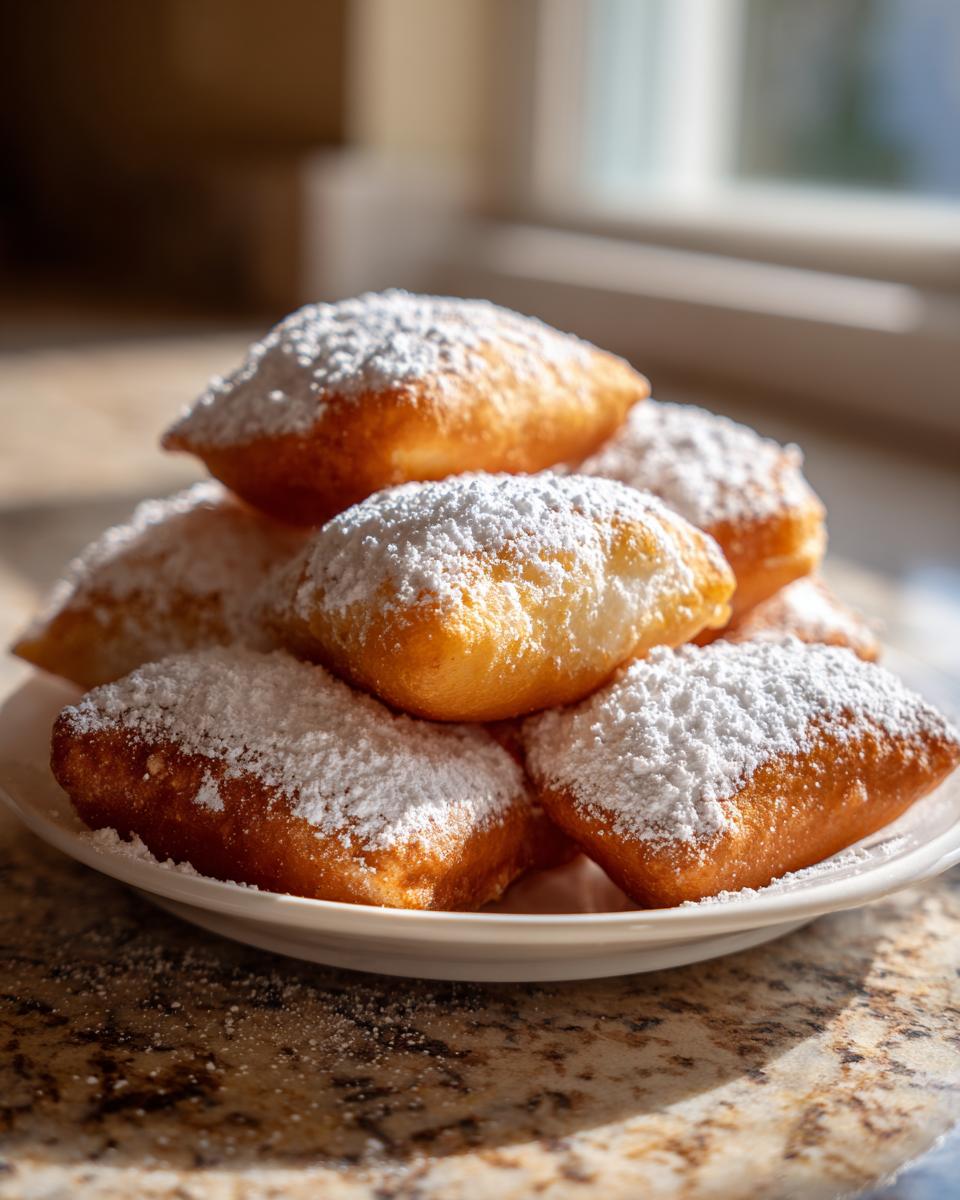
Now, pull out that thermometer! This is non-negotiable for truly great vanilla french beignets. You need a nice deep pot with 2 to 3 inches of vegetable oil heated to 375°F. You must watch it closely and keep it hovering between 365°F and 375°F while frying. Drop in only three or four squares at a time; overcrowding will cause the oil temperature to crash, and then you end up with greasy beignets. Fry them for just one to two minutes per side until they are beautifully puffed and golden brown all over. Immediately move them to paper towels!
Finishing Your Vanilla French Beignets with Powdered Sugar
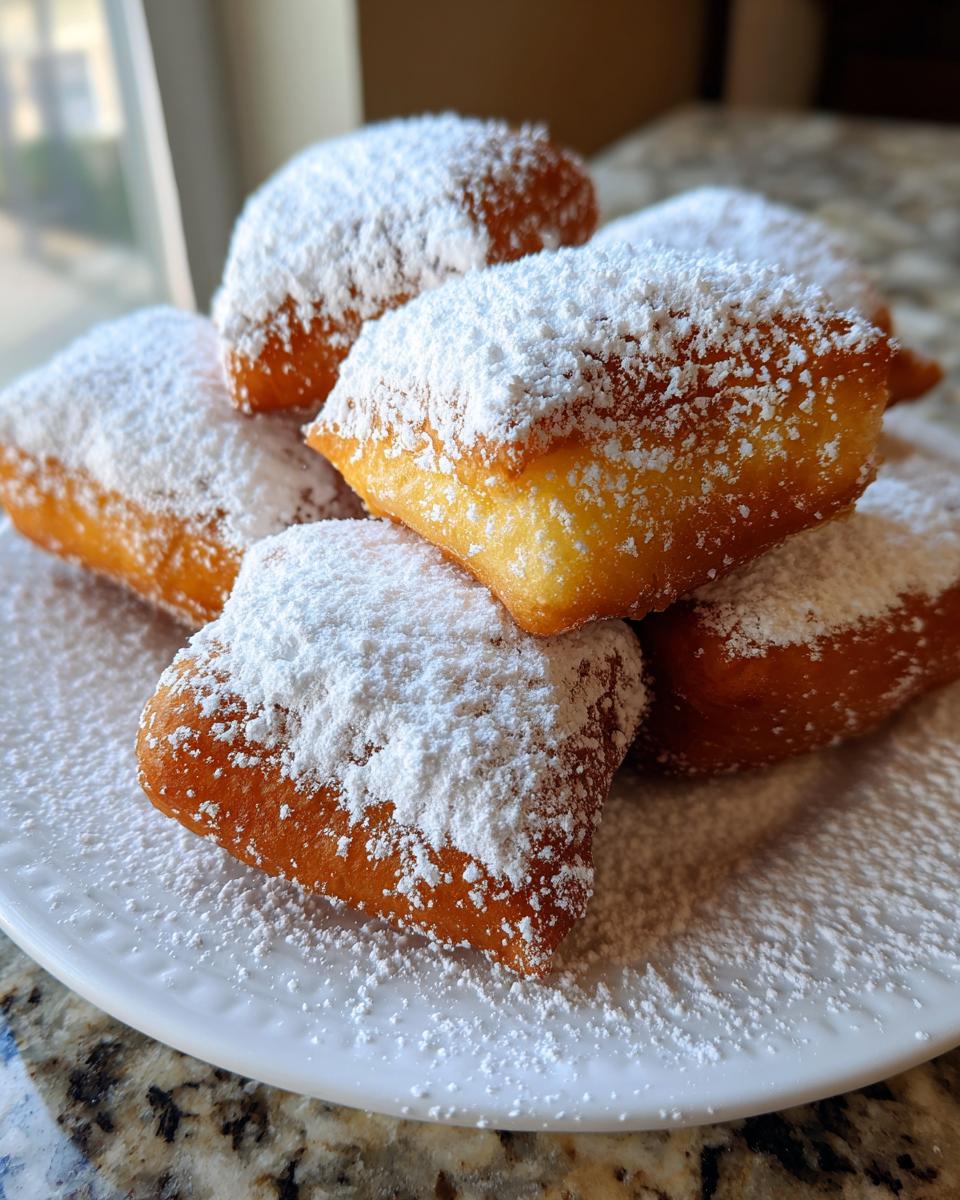
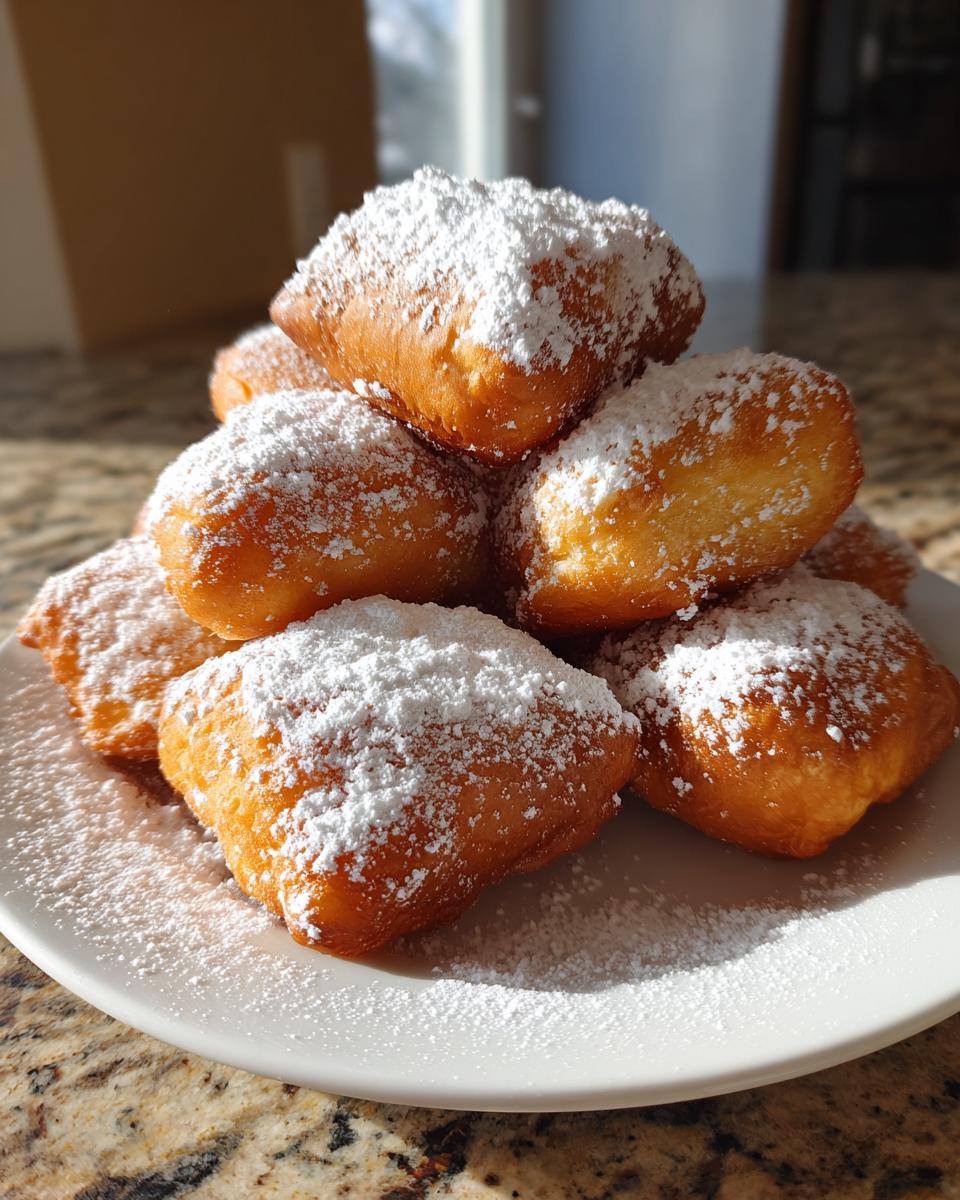
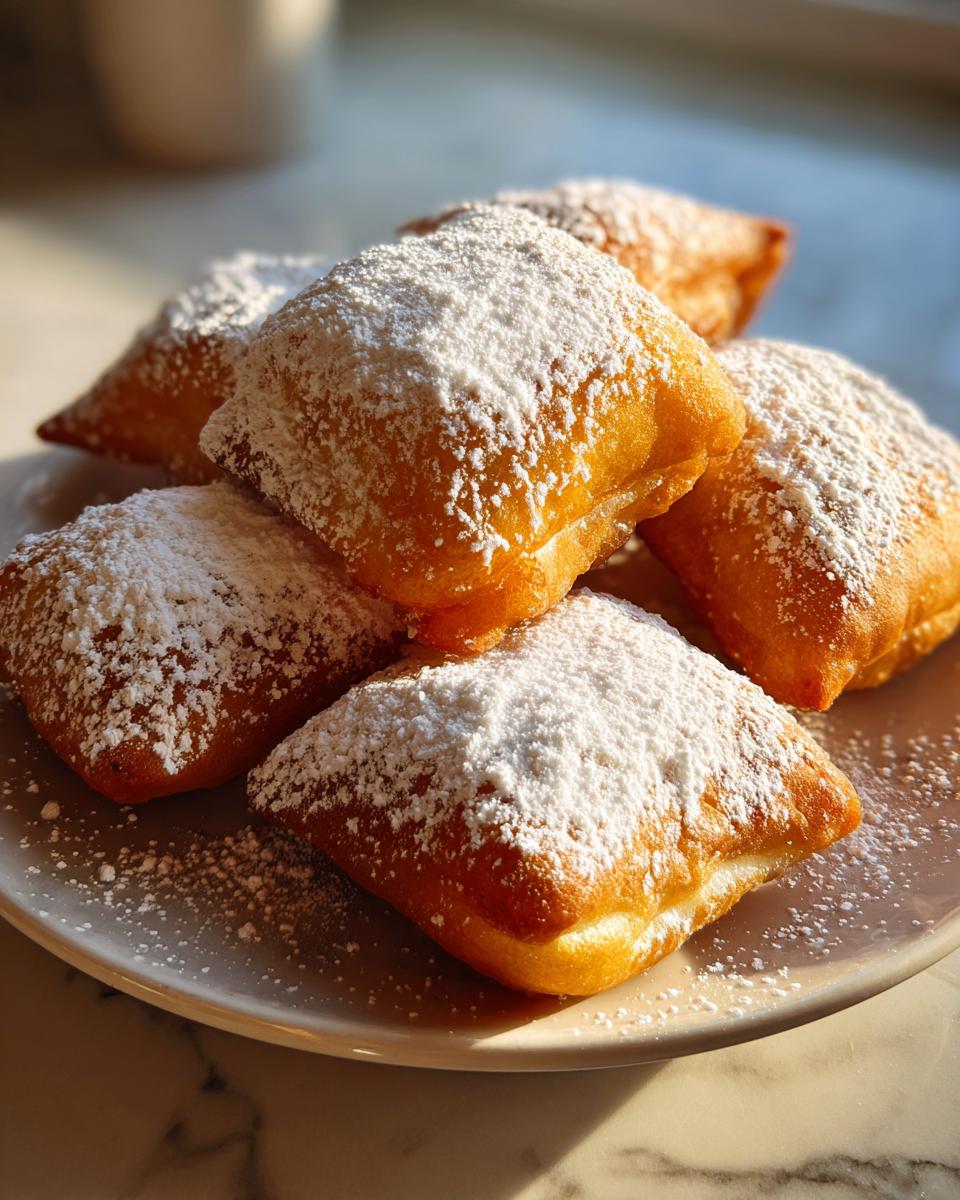
The work is almost done, but the final steps are important! As soon as those golden squares come out of the oil, use a slotted spoon to get them onto a wire rack lined with paper towels. You need to drain off any excess oil right away so they don’t get heavy. These are truly best served the second they come out of the fryer. That beautiful steam hitting the powdered sugar is what makes the whole experience magical. Don’t wait, or they start to deflate! Now we turn these into those perfect powdered sugar fried squares everyone dreams about.
Tips for Success When Making Classic French Beignet Recipe
Look, baking is science, but frying is magic, and sometimes the magic needs a little troubleshooting! I’ve refined this classic french beignet recipe based on dozens of test batches so you don’t waste good butter trying to get the perfect puff. Don’t worry if your first batch looks a little sad; we can fix that next time, or maybe even salvage this one!
Troubleshooting Flat Vanilla French Beignets
If you’re pulling out beignets that look like sad little pancakes, the problem almost always comes down to temperature management. If your milk was too hot when activating the yeast, the yeast died, and you got no rise. On the frying side, if the oil was too cool—say, below 365°F—the dough soaked up all that fat before it could puff up, turning them greasy instead of light! Remember, a happy yeast and a hot, consistent oil are key for those signature puffy vanilla french beignets.
Boosting Vanilla Flavor in Your Pastry
We already use a teaspoon of good extract, but maybe you’re making these for a special party and you want that deep, complex vanilla scent when you bite in. I found that adding about half a teaspoon of vanilla bean paste right in with the extracts really intensifies the flavor profile without changing the texture at all. It’s a tiny step that makes your vanilla french beignets feel even more luxurious. If you’re looking for other yeast options, I have some great tips over on my easy yeast donut recipe post!
Serving Suggestions for Homemade French Cafe Treats
You’ve made perfectly puffy gold squares; now how do you serve them? Honestly, they are perfection just as they are, buried under a mountain of powdered sugar. But if you want to turn this into a real experience, think about what they serve down in the French Quarter!
The traditional pairing is, of course, coffee—especially that dark, robust chicory coffee. The bitterness cuts right through the richness of the fried dough. For something a little fresher, a small bowl of warm berry compote is amazing. We even tested it with a little bit of my Bananas Foster sauce drizzled on the side for a truly decadent experience. These homemade french cafe treats are so versatile; just enjoy them warm!
Storage and Reheating Instructions for Your Vanilla French Beignets
Okay, this is the hard truth about any fried dough: these taste like nothing else when they are hot. Seriously, eat them right away! The magic—that cloud-like interior and crisp exterior—starts fading the minute they cool down substantially. So, if you can manage it, make them in batches right when the craving hits.
But let’s be real, sometimes you make too many, or maybe you just want one for breakfast the next morning! If you have leftovers, you need to store them properly. Keep them in a paper bag or a container lined with paper towels at room temperature for no more than a day. If you stick them in a sealed plastic bag or the fridge, they will get tough and lose all that airy structure we worked so hard to create in our vanilla french beignets dough.
Reheating is possible, but you have to be gentle. I absolutely forbid the microwave; it turns them rubbery instantly. Instead, the best way to revive them a little is in a toaster oven or a regular oven set to a very low temperature, maybe 275°F. Just heat them for about four minutes until they feel warm all the way through, not hot. They won’t ever be quite as perfect as when they first came out of the fryer, but a quick warm-up is way better than eating them cold!
Frequently Asked Questions About Making Beignets
I get so many questions once people dive into making these, and that’s awesome! It shows you’re serious about achieving that perfect, light and airy fried dough. I put my best tips and answers right here to make sure your batch of vanilla french beignets turns out fantastic on your first try. If you’re looking for even quicker morning fixes, check out some of my other ideas for quick and easy breakfasts!
Can I make the dough for these vanilla french beignets ahead of time?
Oh yes, you absolutely can! Yeast doughs are brilliant for making ahead. After you finish the first proof and it’s doubled in size, you can gently punch it down, coat it lightly in oil, cover it tightly, and stick it straight into the fridge for up to 24 hours. When you’re ready to fry your powdered sugar fried squares, let the dough sit on the counter for about an hour to warm up a little before rolling and cutting. That way, you get that incredible texture without waiting hours!
What is the difference between these and regular donuts?
That’s a great question, especially when talking about an easy yeast donut recipe! The biggest difference is the shape and the topping. Most standard donuts are machine-cut into rings or holes, but the characteristic look here is the square or sometimes irregular puff shape. Flavor-wise, while they are both sweet fried doughs, the classic french beignet recipe tends to be a little less sweet in the dough itself, relying almost entirely on that huge dusting of powdered sugar on top for the sweetness!
Estimated Nutritional Data for This Dessert
Because we are working with deep-fried dough, these homemade French cafe treats are certainly an indulgence, not an everyday staple! I always tell folks not to stress too much about the numbers when it comes to something this special, but I know some of you are curious. I calculated this based on the recipe using standard ingredients listed above.
Please remember this is just an estimate based on two squares being one serving size. The actual values can shift a bit depending on how much oil sticks to the pastry, but it gives you a good general idea of what you’re enjoying!
- Serving Size: 2 squares
- Calories: Approximately 280
- Total Fat: 12g (Keep in mind much of this is from the frying medium)
- Saturated Fat: 4g
- Total Carbohydrates: 38g
- Sugar: 18g
- Protein: 5g
Share Your Puffy Creations
Now, the best part! I poured my heart into making sure this vanilla french beignets recipe gives you that perfect, pillowy texture. I really hope you try making these, because there’s nothing better than seeing your results!
If you made them and they turned out golden and fluffy, please come back and leave a rating for the recipe! It helps me know what’s working for everyone out there. And while you’re at it, snap a picture of your beautiful, sugar-dusted squares and tag me on social media. It absolutely makes my day to see the delicious things you’re cooking up!
I’m so curious—what did you decide to serve alongside your homemade batch? Did you go for the traditional chicory coffee, or did you try something totally new? Let me know in the comments below!
If you want more treats just like this one that are guaranteed to bring a smile, you can browse all my other proven sweets over on my dessert recipes page. Happy frying!
PrintAuthentic Vanilla French Beignets: A Step-by-Step Guide to Perfectly Puffy Dough

Make light, airy, and pillowy fried dough squares with a strong vanilla flavor. This recipe provides clear instructions for yeast dough and proper deep-frying to achieve classic French beignets at home.
- Prep Time: 30 min
- Cook Time: 20 min
- Total Time: 1 hour 50 min
- Yield: About 16 servings 1x
- Category: Dessert
- Method: Deep Frying
- Cuisine: French
- Diet: Vegetarian
Ingredients
- 1 cup warm milk (about 105-115°F)
- 2 1/4 teaspoons active dry yeast
- 1/4 cup granulated sugar
- 1 large egg, room temperature
- 1/4 cup unsalted butter, melted and cooled slightly
- 1 teaspoon pure vanilla extract
- 3 cups all-purpose flour, plus more for dusting
- 1/2 teaspoon salt
- Vegetable oil, for deep frying
- Powdered sugar, for dusting
Instructions
- Activate the yeast: Pour the warm milk into a large bowl. Sprinkle the yeast over the milk and add 1 teaspoon of the sugar. Let stand for 5 to 10 minutes until foamy.
- Mix wet ingredients: Whisk the remaining sugar, the egg, melted butter, and vanilla extract into the yeast mixture until combined.
- Combine dry ingredients: In a separate bowl, whisk together the flour and salt.
- Form the dough: Gradually add the dry ingredients to the wet ingredients, mixing until a shaggy dough forms. Turn the dough out onto a lightly floured surface.
- Knead: Knead the dough for 5 to 7 minutes until it is smooth and elastic. It will be slightly sticky.
- First proof: Place the dough in a lightly oiled bowl, turning to coat. Cover the bowl with plastic wrap or a clean towel. Let the dough rise in a warm place for 1 to 1.5 hours, or until doubled in size.
- Roll out: Gently punch down the risen dough. On a lightly floured surface, roll the dough out to a uniform thickness of about 1/4 inch.
- Cut the beignets: Use a sharp knife or pizza cutter to cut the dough into 3-inch squares.
- Second proof (optional but recommended for airiness): Place the cut squares on parchment-lined baking sheets, cover loosely, and let rest for 20 minutes.
- Heat the oil: Pour 2 to 3 inches of vegetable oil into a deep, heavy-bottomed pot or Dutch oven. Heat the oil to 375°F (190°C). Use a thermometer to monitor the temperature.
- Fry the beignets: Carefully drop 3 to 4 squares into the hot oil, ensuring you do not overcrowd the pot. Fry for 1 to 2 minutes per side, flipping once, until they are puffed and golden brown.
- Drain: Remove the beignets with a slotted spoon and place them on a wire rack lined with paper towels to drain excess oil.
- Serve immediately: While still warm, generously dust the beignets with powdered sugar. Serve with coffee or chicory coffee.
Notes
- For the best rise, ensure your milk is warm, not hot, to avoid killing the yeast.
- Maintain the oil temperature between 365°F and 375°F. If the oil is too cool, the beignets will absorb too much grease and be flat; if too hot, they will brown before puffing.
- If you prefer a stronger vanilla flavor, you can add 1/2 teaspoon of vanilla bean paste to the dough mixture.
Nutrition
- Serving Size: 2 squares
- Calories: 280
- Sugar: 18
- Sodium: 150
- Fat: 12
- Saturated Fat: 4
- Unsaturated Fat: 8
- Trans Fat: 0
- Carbohydrates: 38
- Fiber: 1
- Protein: 5
- Cholesterol: 35