

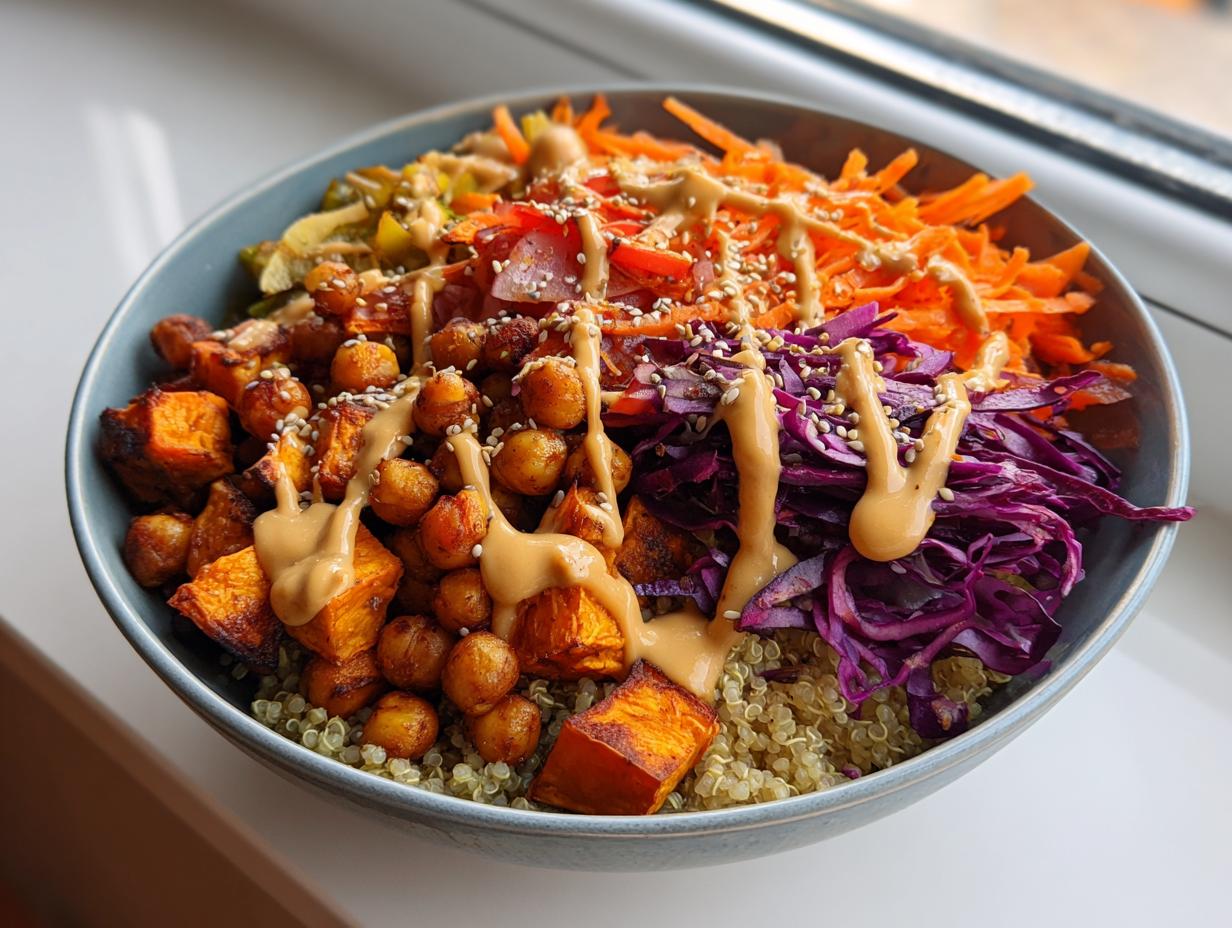
Are you tired of eating healthy meals that leave you staring down the clock, waiting for the real lunch break to arrive? I totally get it. Back when I was diving deep into nutrition studies, and later testing recipes where precision was everything, I realized that ‘healthy’ shouldn’t mean ‘happily starving.’ That’s why I fell head-over-heels for the **buddha bowl**. It’s the blueprint for a complete, balanced plate that just works. This recipe, my High-Protein Vegan Thai Peanut **buddha bowl**, comes straight from that experience—it’s absolutely foolproof, vibrant, incredibly filling, and built specifically for you to crush your week with amazing meal prep sessions. If you love this concept, be sure to check out my other healthy lunch ideas for even more inspiration!
- Why This Thai Peanut Buddha Bowl Recipe Works for You
- Assembling Your High-Protein Vegan Buddha Bowl: Ingredients
- Step-by-Step Instructions to Build Your Buddha Bowl
- Expert Tips for the Best Buddha Bowl Experience
- Variations for Your Next Buddha Bowl
- Storing and Reheating Your Buddha Bowl Components
- Frequently Asked Questions About Making a Buddha Bowl
- Nutritional Estimates for This Complete Dietary Meal
- Share Your Perfect Buddha Bowl Creation
Why This Thai Peanut Buddha Bowl Recipe Works for You
Trust me, this isn’t just another pile of veggies. This specific **buddha bowl** formula solves so many weeknight hurdles! It hits every spot you need: flavor, reliable nutrition, and minimal cleanup. It’s designed so you don’t have to think about cooking again until the next prep session.
High Protein Bowls for Lasting Fullness
When I studied nutrition, the biggest complaint I heard was that vegetarian meals just didn’t keep folks satisfied. Well, we fixed that! The combination of our fluffy quinoa base and those perfectly roasted chickpeas turns this into one of the best easy meal prep bowls you’ll ever make. You feel content, not stuffed!
Perfect for Easy Meal Prep Bowls
Everything sweetens up nicely in the fridge, and honestly, the Thai Peanut Sauce tastes even better the next day. Roasting the sweet potatoes means they hold their shape perfectly all week long. This structure makes it a fantastic go-to for quick nutrient dense lunches when your schedule is packed.
You can whip up four of these for the week in under an hour, making them ideal for easy weeknight dinners too.
Assembling Your High-Protein Vegan Buddha Bowl: Ingredients
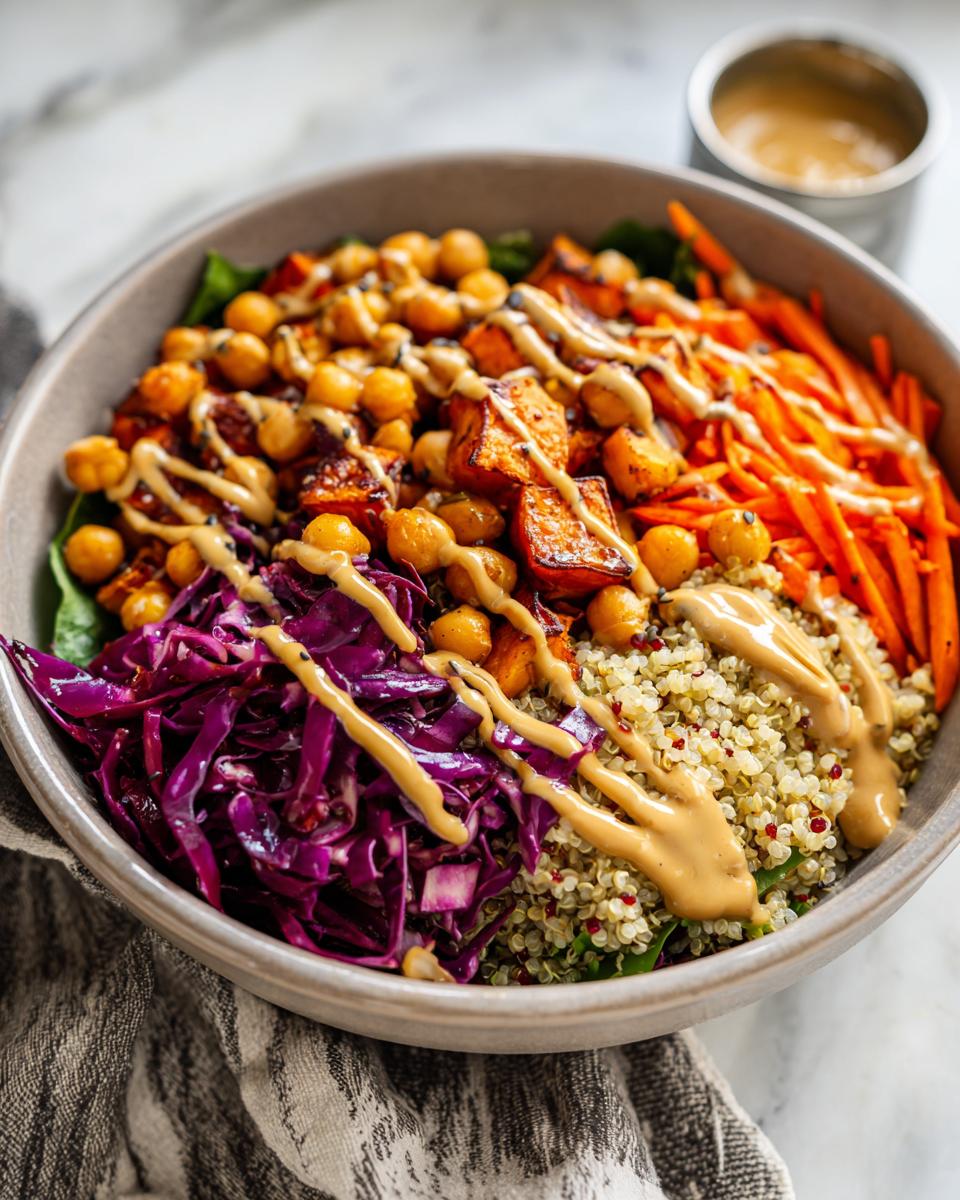
Okay, now for the fun part: gathering everything! The beauty of the **buddha bowl** is that it’s a template, not a strict rulebook. You can absolutely swap spinach for kale, or carrots for bell peppers, but the measurements I give you here are what nail that perfect texture and flavor profile we’re after. Clarity in what goes where just builds confidence, right? Here are the pieces you need to make this work!
If you are looking for some other ways to roast vegetables, though, I have a fantastic recipe for sweet potato soufflé that is completely different but just as delicious!
For the Roasted Base and Grains
These are the components that give your bowl its heft and structure. Don’t skip roasting the chickpeas—it gives them that necessary little crunch!
- 1 large sweet potato, cubed
- 1 (15 ounce) can chickpeas, rinsed and drained
- 1 tablespoon olive oil
- 1/2 teaspoon salt
- 1/4 teaspoon black pepper
- 1 cup dry quinoa, cooked according to package directions (you’ll yield about 3 cups cooked)
For the Fresh Vegetables and Greens
This is where we bring in the color so it looks just as good as it tastes. Vibrant veggies mean good vibes, I swear!
- 4 cups mixed greens (spinach, kale, or spring mix)
- 1 cup shredded red cabbage
- 1 large carrot, julienned
- 1/2 cup shelled edamame (cooked)
For the Thai Peanut Sauce Recipe
Honestly, you could eat this peanut sauce with a spoon. It’s the heart of this Asian inspired bowl! If you need this to be strictly gluten-free, make sure you swap in tamari for traditional soy sauce.
- 1/2 cup creamy peanut butter
- 1/4 cup warm water (you might need a little more)
- 3 tablespoons soy sauce or tamari (for gluten free compliance)
- 2 tablespoons maple syrup
- 1 tablespoon rice vinegar
- 1 teaspoon grated fresh ginger
- 1 clove garlic, minced
If you love homemade sauces, you have to see my recipe for homemade peanut sauce that goes on chicken satay—it’s related but has a slightly different kick!
Optional Creamy Tahini Drizzle
This is totally optional, but adding a drizzle of this silky thing on top of the peanut sauce adds this amazing creamy, bright counterpoint. It really elevates the whole experience of eating this **buddha bowl**.
- 1/4 cup tahini
- 2 tablespoons lemon juice
- 2-4 tablespoons warm water (to thin)
- Pinch of salt
If you’re looking for other creamy components, check out my recipe for easy homemade creamy mayonnaise—while it’s not for this bowl, the technique for thinning tahini is very similar!
Step-by-Step Instructions to Build Your Buddha Bowl
Putting together a perfect **buddha bowl** isn’t just throwing things in a container; it’s about building layers of texture and flavor so every forkful is a winner. My background in test kitchens means I sweat the small stuff so you don’t have to! The timing here is great, too, since you can do the roasting, sauce making, and quinoa cooking all at once. If you’re looking for other ways to incorporate roasted veggies into your meals, check out my recipe for roasted vegetable lasagna!
Roasting the Sweet Potatoes and Chickpeas
First step: get that oven humming! You need to preheat it to 400°F (200°C). On a good-sized baking sheet, toss your cubed sweet potato and the rinsed chickpeas with that tablespoon of olive oil, salt, and pepper. Make sure everything gets coated nicely! Pop them into the oven for about 20 to 25 minutes. Seriously, flip them halfway through so they get that beautiful, slight caramelization on all sides. They should be tender when you poke them.
Preparing the Flavorful Thai Peanut Sauce
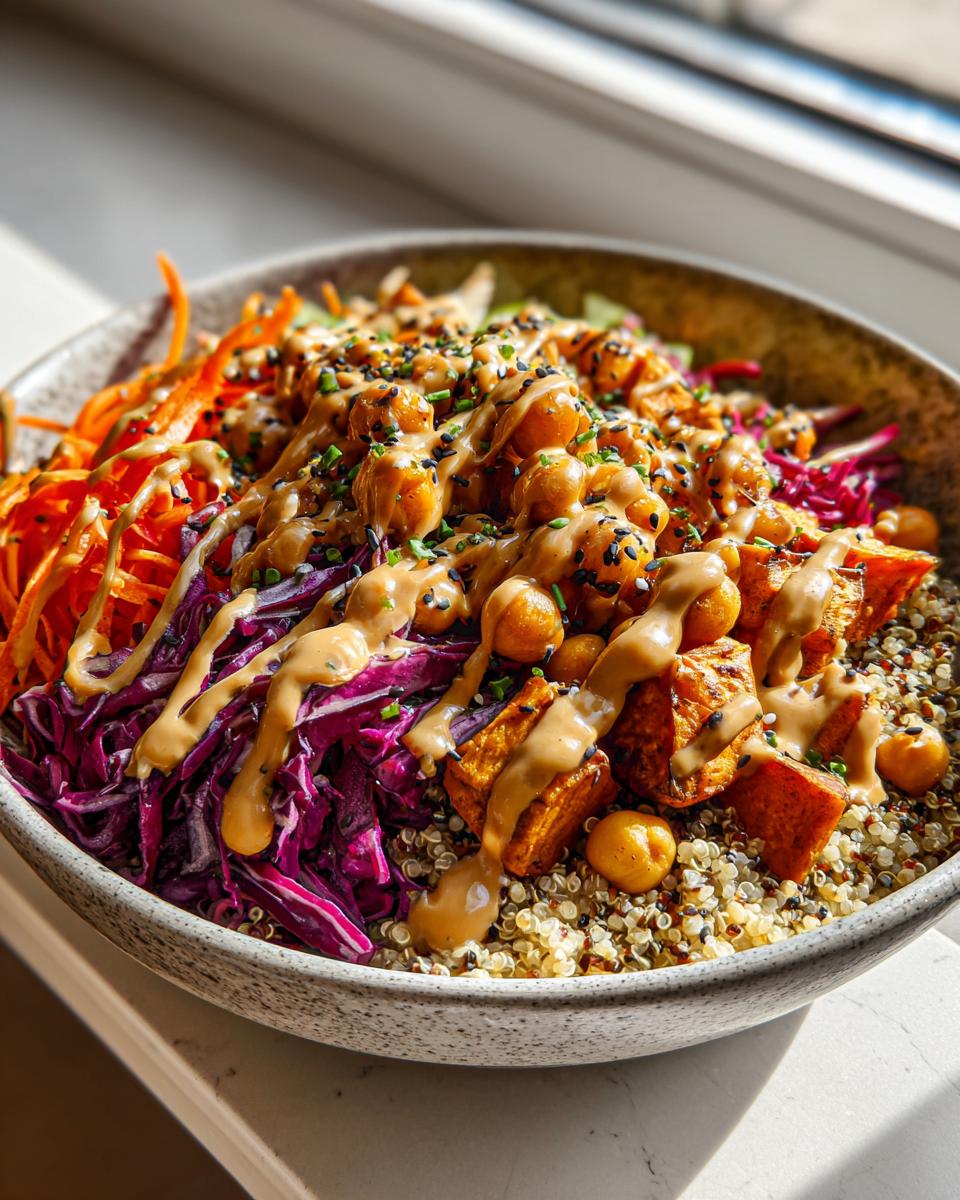
While things are roasting away, let’s make that amazing Thai Peanut Sauce. Grab a small bowl—no need for fancy equipment here—and whisk together the peanut butter, the warm water, soy sauce (or tamari!), maple syrup, rice vinegar, fresh ginger, and minced garlic. Keep whisking until it’s totally smooth. If it looks a little stiff, just keep adding warm water a teaspoon at a time. You want it pourable, ready to drizzle generously over your finished **buddha bowl**.
Cooking the Quinoa and Assembling the Buddha Bowl
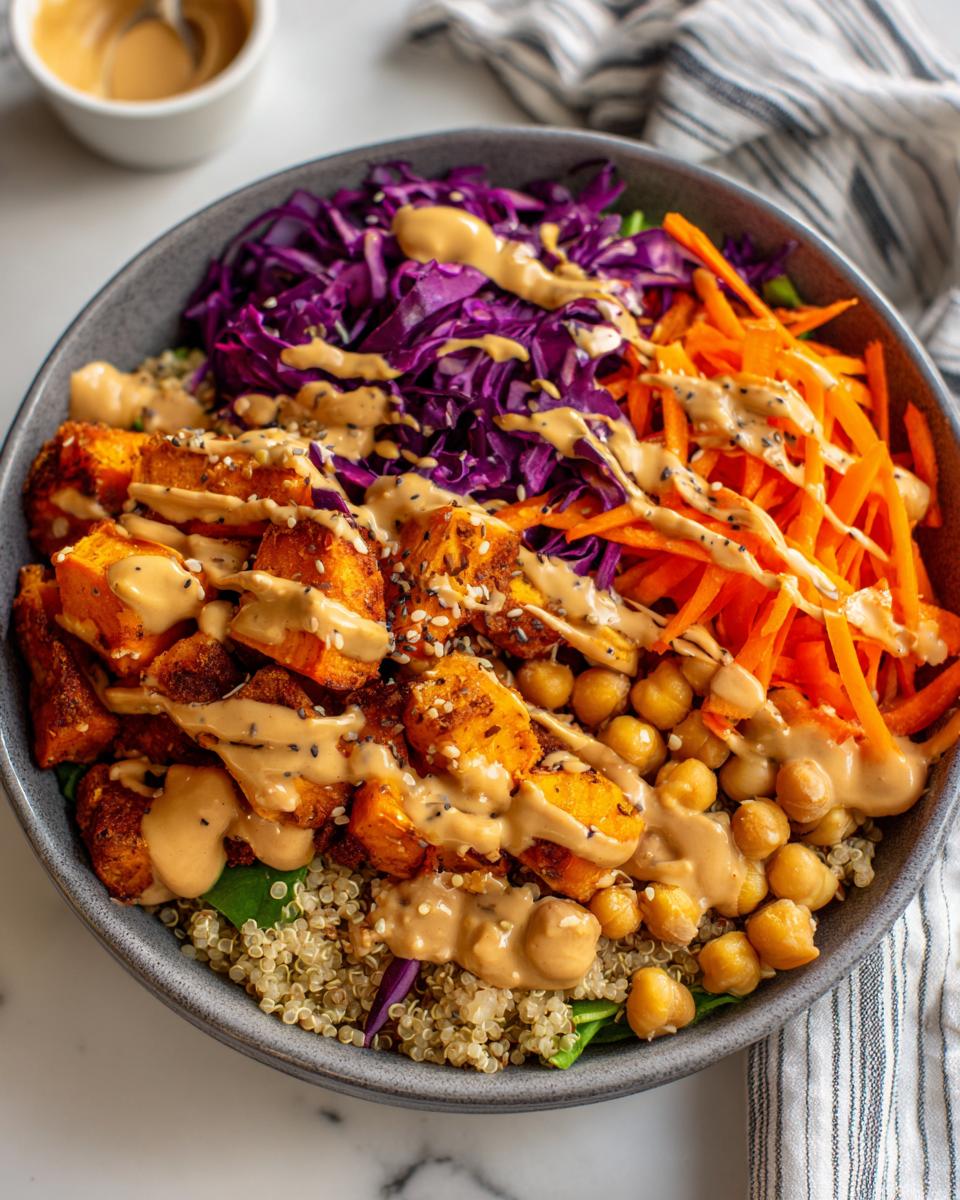
While the oven is doing its thing, cook your quinoa according to the package directions. Once that’s done and fluffy, it’s time to build! Start with a good layer of cooked quinoa as your foundation in each bowl. Then, lay down your mixed greens next. After that, arrange your roasted sweet potatoes, those crisp chickpeas, the shredded cabbage, carrots, and the edamame neatly on top. Don’t just dump it all in a pile! Finish it all off with a big swirl of that Thai Peanut Sauce. If you want to take your savory side up a notch, try putting a dollop of the roasted versions of my creamy garlic potatoes right next to your quinoa!
Expert Tips for the Best Buddha Bowl Experience
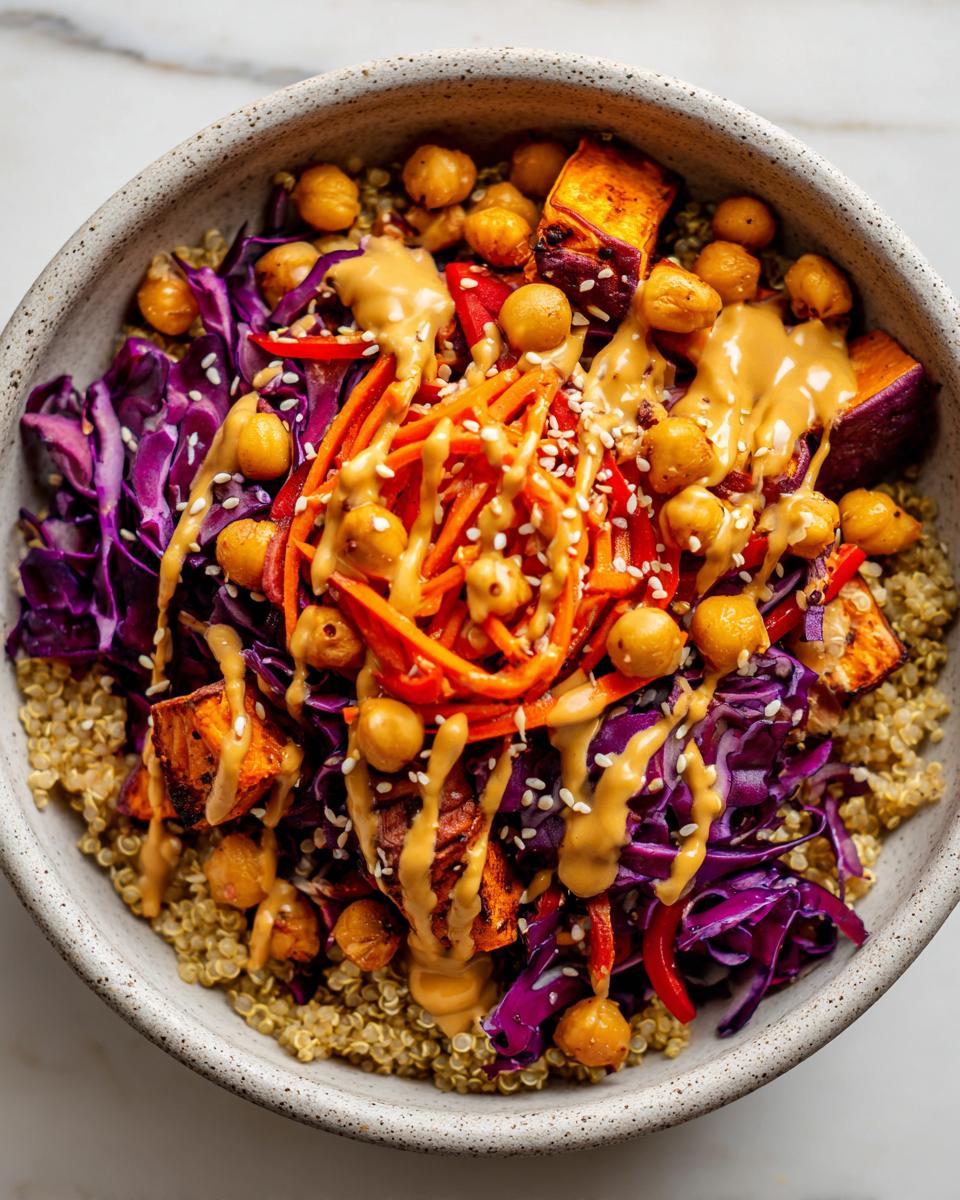
You know, when recipes leave the test kitchen and come into my real home kitchen, I always look for little tweaks that make them foolproof and super tasty. That’s what separates a good **buddha bowl** from one you dream about weeks later! It’s all about maximizing what you’re already doing. These small adjustments help ensure you get that restaurant-quality depth of flavor every single time, even if you’re just throwing things together on a Tuesday night.
Here are a couple of pro moves I use to keep things exciting and deeply satisfying:
Boosting Flavor in Your Roasted Vegetable Bowls
Roasting vegetables is already a game-changer because the heat concentrates all that natural sweetness, turning those simple veggies into stars. But if you want to lean into that anti-inflammatory side of things like some folks look for in their quick dips, try this! Before you toss your sweet potatoes and chickpeas with oil, add about half a teaspoon of ground turmeric right there with the salt and pepper. It gives everything a gorgeous golden glow and adds a subtle earthy note that plays really well with the peanut sauce in these roasted vegetable bowls. You won’t taste it distinctly, but you’ll notice how *nourished* you feel!
Ingredient Swaps for High Protein Bowls
Chickpeas are fantastic, no question, but sometimes you just want a change up in your routine, right? When I prep these **High Protein Bowls**, I often rotate my main protein source just to keep things interesting. If you’re not feeling chickpeas one week—or maybe you just have a big block of tofu staring at you—go for it! You can totally substitute the chickpeas with about 14 ounces of cubed extra-firm tofu or tempeh.
The key is to roast those substitutes the exact same way you roast the chickpeas: oil, salt, pepper, same temperature, same time. They soak up those spices beautifully and keep that necessary outside crispness. If you are into increasing your protein overall, you might also like checking out my guide to creamy high-protein overnight oats for breakfast!
Variations for Your Next Buddha Bowl
The best part about mastering the **buddha bowl** structure is that you can switch up the flavor every single week without having to learn a whole new recipe. Once you know how to balance your roasted items, your greens, and your grain base, the sauces are where you introduce endless fun! I love keeping the base components similar—sweet potato and chickpeas are always winners—but completely changing the dressing turns it into a brand-new meal for your flavor rotation.
Asian Inspired Bowls Flavor Swaps
If you’ve made the Thai Peanut version twice in a row (and trust me, you might!), let’s pivot slightly within that Asian Inspired Bowls column. Instead of the creamy peanut sauce, try something lighter and zingier! I’ve seen amazing success using a simple Sesame Ginger dressing. It keeps the vibe bright and cuts through the earthiness of the sweet potato beautifully. You could also try swapping the chickpeas for sesame-coated baked tofu. It keeps the plant-based power high but offers a completely different texture!
If you want more sauce inspiration beyond what I give here, I highly recommend browsing through this great list of sauces for buddha bowls—there are so many fantastic ideas to keep things exciting!
Gluten Free Dinner Ideas with Different Grains
Quinoa is my usual go-to for protein and cooking speed, but sometimes a grain fatigue hits! Don’t worry, we can swap that out and still keep this firmly in the realm of reliable Gluten Free Dinner Ideas. You have tons of options here.
- **Brown Rice:** Always a solid, chewy base. Just make sure you cook it until it’s perfectly fluffy, not mushy!
- **Farro:** This gives you a wonderful nutty depth, though note that traditional farro has gluten, so if you need strictly GF, make sure you source GF farro or stick to rice.
- **Millet:** It’s incredibly nutritious and cooks up light and fluffy—a great alternative to quinoa if you want something less earthy.
The key is remembering that whatever grain you choose, it needs to be cooked perfectly because it’s the absorbent foundation for all those amazing roasted vegetables and sauces!
Storing and Reheating Your Buddha Bowl Components
If you’re planning ahead—and I hope you are, because this makes life so much easier—storage is everything for your easy meal prep bowls. Never, ever store the sauces mixed into the bowls! Peanut sauce and that yummy tahini drizzle will soak into your quinoa and greens, turning everything sad and soggy by Wednesday.
Here’s what I do: Keep the grains, the roasted items, and the fresh veggies layered in your containers. Then, put the Thai Peanut Sauce and the Tahini Drizzle into tiny, separate airtight jars. When lunchtime rolls around, just drizzle the fresh sauce over the top. It stays vibrant and creamy that way!
Frequently Asked Questions About Making a Buddha Bowl
I know you might have a few lingering questions, especially when you’re trying to nail down that perfect mix for your **buddha bowl** prep session. That’s why I put together these quick answers. Think of this as the FAQ section I wish I had when I was first figuring out how to layer flavor in these powerhouse meals!
Is this **buddha bowl** recipe truly vegan and gluten-free?
That’s a great question, because those labels matter! Yes, the core recipe as written is completely vegan. We’re using chickpeas and quinoa for our main protein and grain structure, so zero animal products here. To keep it firmly in the **gluten free dinner ideas** category, you absolutely must use tamari instead of regular soy sauce when mixing up that Thai Peanut Sauce. Tamari is just naturally gluten-free soy sauce, and it tastes just as delicious!
How do I make the **Creamy Tahini Sauce Recipe** thicker?
This is a common issue with homemade dressings because tahini brands vary so much in their consistency! Remember how I said to add the warm water slowly? If you find your sauce is too thin—maybe you added too much water chasing that pourable consistency—the fix is easy. Just whisk in a little more tahini, a tablespoon at a time, until it firms up. If you want it much thicker—more like a dip than a drizzle—use less water overall next time. You want it velvety, not runny!
What makes these **Healthy Bowl Recipes** balanced?
That’s the science I brought over from the test kitchen! A truly balanced bowl, the kind that keeps you full and energized, needs components from all the major food groups. For these **Healthy Bowl Recipes** to work as a complete dietary meal, you need: Protein (chickpeas/tofu), Complex Carbs (quinoa/sweet potato), Healthy Fats (peanut butter/tahini), and Fiber/Vitamins (the huge pile of fresh veggies and greens). When you hit all those markers, you’ve built a power bowl that genuinely nourishes you. If you’re looking for other ways to boost your nutrition intake, take a peek at my recipe for low-calorie, gluten-free protein cheesecake—it’s a total game changer for dessert!
Nutritional Estimates for This Complete Dietary Meal
I always want you to know exactly what you’re putting into your body when you make one of my recipes. Since I pulled all the numbers together from the exact ingredients listed above—using standard measurements, mind you—these figures are a really good benchmark for what you gain from one single serving of this Thai Peanut **buddha bowl**. Keep in mind that if you load way up on the peanut sauce (and who could blame you?), those numbers will shift a bit!
We designed this to hit that sweet spot for a **Complete Dietary Meal**—it’s got protein, great fats, and complex carbs to keep your energy steady all afternoon. If you have any questions or want to dive deeper into the testing process, please don’t hesitate to reach out through my contact page!
- Serving Size: 1 bowl
- Calories: 650
- Protein: 25g (See? I told you it was high protein!)
- Fat: 35g (Mostly healthy fats from the peanut butter and tahini)
- Saturated Fat: 5g
- Carbohydrates: 70g
- Fiber: 15g (That’s a huge chunk of your daily needs right there!)
- Sugar: 18g
- Sodium: 650mg
- Cholesterol: 0mg
Remember, these numbers are based on the specific recipe card I wrote out. If you use low-sodium tamari or use less maple syrup in the sauce, your totals change! That’s the customization power of the **buddha bowl**!
Share Your Perfect Buddha Bowl Creation
Wow, we made it to the end! Cooking should always feel like a conversation, not a lecture, and I truly hope this Thai Peanut **Buddha Bowl** recipe has inspired you to get into the kitchen without feeling stressed out. I put so much work into testing these measurements because I want you to feel that “YES!” moment when you taste it for the first time.
Now, here’s where you come in! I absolutely adore seeing how you all customize these vibrant bowls. Did you add some cilantro? Did you go heavy on the tahini drizzle? Please, please, please leave a rating down below—five stars if it worked its magic on your weeknight dinner planning! Even a quick comment lets me know what’s working and helps me refine these recipes for everyone else who trusts the process.
Every piece of feedback you share helps me keep the warmth and reliability of my test kitchen experience alive here on the blog, making sure that every recipe on Cooking by Jade is a total win. If you loved this journey, you can read more about my whole philosophy on simple, flavor-forward food on my About Page!
PrintHigh-Protein Vegan Thai Peanut Buddha Bowl with Roasted Sweet Potatoes
Create a satisfying, nutrient-dense Buddha bowl using roasted sweet potatoes, chickpeas, and a creamy homemade Thai peanut sauce. This recipe is excellent for meal prep and provides a complete, balanced plant-based meal.
- Prep Time: 20 min
- Cook Time: 25 min
- Total Time: 45 min
- Yield: 4 servings 1x
- Category: Dinner
- Method: Roasting and Assembly
- Cuisine: Asian Inspired
- Diet: Vegan
Ingredients
- 1 large sweet potato, cubed
- 1 (15 ounce) can chickpeas, rinsed and drained
- 1 tablespoon olive oil
- 1/2 teaspoon salt
- 1/4 teaspoon black pepper
- 1 cup dry quinoa, cooked according to package directions
- 4 cups mixed greens (spinach, kale, or spring mix)
- 1 cup shredded red cabbage
- 1 large carrot, julienned
- 1/2 cup shelled edamame (cooked)
- For the Thai Peanut Sauce:
- 1/2 cup creamy peanut butter
- 1/4 cup warm water
- 3 tablespoons soy sauce or tamari (for gluten free)
- 2 tablespoons maple syrup
- 1 tablespoon rice vinegar
- 1 teaspoon grated fresh ginger
- 1 clove garlic, minced
- For the Tahini Drizzle (Optional):
- 1/4 cup tahini
- 2 tablespoons lemon juice
- 2–4 tablespoons warm water
- Pinch of salt
Instructions
- Preheat your oven to 400°F (200°C). Toss the cubed sweet potato and drained chickpeas with olive oil, salt, and pepper on a baking sheet. Roast for 20 to 25 minutes, flipping halfway, until the potatoes are tender and slightly caramelized.
- While the vegetables roast, prepare the Thai Peanut Sauce. In a small bowl, whisk together the peanut butter, warm water, soy sauce, maple syrup, rice vinegar, ginger, and garlic until smooth. Add more water, one teaspoon at a time, if you prefer a thinner consistency.
- Prepare the Tahini Drizzle, if using. Whisk the tahini, lemon juice, and salt. Slowly add warm water until you reach a pourable, creamy texture.
- Cook the quinoa according to package instructions. You should have about 3 cups cooked quinoa.
- Assemble your Buddha bowls. Divide the cooked quinoa among four bowls. Arrange the mixed greens, roasted sweet potatoes, roasted chickpeas, red cabbage, carrots, and edamame neatly over the quinoa base.
- Drizzle generously with the Thai Peanut Sauce and the optional Tahini Drizzle. Serve immediately, or cover and refrigerate for easy meal prep.
Notes
- For an anti-inflammatory boost, add 1/2 teaspoon of turmeric to the sweet potatoes before roasting.
- This recipe is easily adaptable for high-protein needs; substitute the chickpeas with baked tofu or tempeh.
- Make the sauces ahead of time and store them in separate airtight containers in the refrigerator for up to one week.
Nutrition
- Serving Size: 1 bowl
- Calories: 650
- Sugar: 18
- Sodium: 650
- Fat: 35
- Saturated Fat: 5
- Unsaturated Fat: 30
- Trans Fat: 0
- Carbohydrates: 70
- Fiber: 15
- Protein: 25
- Cholesterol: 0