

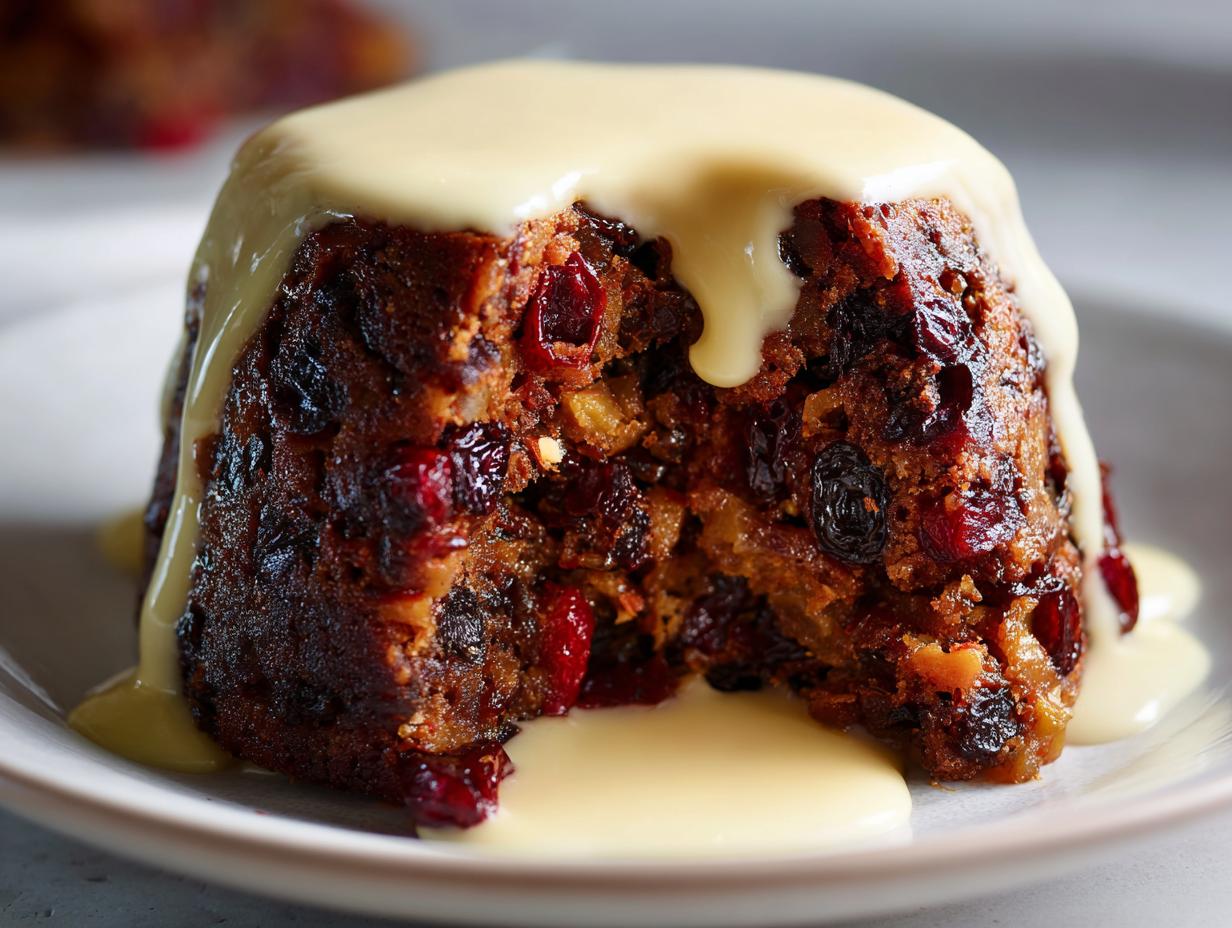
When the air gets crisp and the scent of spice starts drifting through the kitchen, you know it’s time for something truly special. For me, that means pulling out the pudding basin for a rich, dark **plum pudding**—the real, traditional kind made for the holidays! I know some home cooks, just like I was, might look at these old recipes and feel a little intimidated. After all, I spent time both learning nutrition concepts and working in professional test kitchens, and I can tell you that this dessert isn’t about fancy techniques; it’s about patience and comfort. Have you checked out my story over at Cooking by Jade to see where this passion comes from?
This recipe, born from that old-world tradition, delivers that deep, dense result we all crave. Trust me, we’re going to make this classic holiday dessert foolproof together. You won’t have to guess or worry—just reliable, warm results every time you make it.
- Why This Traditional Plum Pudding Recipe Works (The Secret to a Rich Moist Pudding)
- Gathering Ingredients for Your Old Fashioned Plum Pudding
- Mastering the Steaming Process for Christmas Pudding Steamed
- Step-by-Step Instructions for Cooking Your Plum Pudding
- Crafting the Perfect Plum Pudding with Brandy Sauce
- Storage and Reheating Instructions for Your Festive Fruit Pudding
- Tips for Serving This Victorian Christmas Dessert
- Troubleshooting Common Issues with Steamed Pudding
- Frequently Asked Questions About Making Plum Pudding
Why This Traditional Plum Pudding Recipe Works (The Secret to a Rich Moist Pudding)
If you’re looking for a **Rich Moist Pudding**, this **Traditional Plum Pudding Recipe** is absolutely it. Forget those dry, crumbly versions you might have had! The real magic here is twofold: the soak, and the slow steam. When I’m developing recipes in the test kitchen, I focus on maximizing moisture, and soaking the fruit overnight in a little brandy is non-negotiable. It plumps them up beautifully and infuses that deep holiday flavor right into the fruit before it even hits the batter.
Plus, steaming—rather than baking—is what sets this apart. It cooks gently, locking everything in. You can check out how I apply moisture science to cakes on my fruit cake recipe, but the principles are the same here!
Key Components of a Classic Holiday Dessert
What makes this a true **Classic Holiday Dessert**? It’s the sheer density of flavor the steaming process creates. We’re layering dark brown sugar with suet, robust dried fruits, and warming winter spices like cinnamon and nutmeg. This isn’t a light sponge cake; this is the heavy-hitter from the **British Christmas Dessert** playbook that stands up beautifully on the table and tastes even better when you serve it later. It’s meant to be deeply flavorful and incredibly satisfying!
Gathering Ingredients for Your Old Fashioned Plum Pudding
Alright, let’s talk about what you need to make this magnificent **Old Fashioned Plum Pudding**. When you look at the list, it might seem long, but stick with me—each item plays its part perfectly! We’re building layers of flavor here, which is why having these components ready makes the whole process smooth.
For the pudding itself, you absolutely need that nice, rich flavor from the **dark brown sugar**—don’t try to swap it all for white sugar; you’ll lose the deep color! Make sure your **3 large eggs are lightly beaten** before they go in so they mix evenly. And for the fat content, we are using traditional suet, but if you can’t find it or prefer not to, a vegetarian substitute works just fine. Do check out my tips on using high-quality citrus in my scone recipe; good ingredients really do matter!
When we get to the Brandy Butter Sauce, the key is keeping things simple and smooth. That means using softened real butter and making sure your confectioners’ sugar is **powdered sugar, sifted**—otherwise, you get little white pebbles in your sauce! Nobody wants that!
Ingredient Notes and Substitutions for Festive Fruit Pudding
Let’s dive deeper into those ingredients because this is where home cooks often get nervous. First up, the fruit mix! The recipe calls for 350g of mixed dried fruit—that usually means raisins, currants, and sultanas. If you want to get fancy, I usually add about 50g of mixed candied peel or dried cherries for a pop of color and extra chewiness. That extra little bit of fruit mix is my little secret for a truly packed **Festive Fruit Pudding**.
Now, about the brandy. Yes, the recipe calls for it for soaking the fruit and flavoring the batter, plus that stunning finish! But if you’re making this for kids or folks avoiding alcohol, it’s really easy to skip it. For the soak, just use warm orange juice instead. The alcohol mainly adds depth, not primary flavor, so you won’t lose the essence of the pudding if you need a non-alcoholic version.
And remember the suet! If you use a vegetarian suet substitute, make sure it’s relatively firm when you measure it out so you get the right amount of richness in your batter. You want that traditional, hearty texture, and the suet helps give it texture that butter alone just can’t replicate in a steamed pudding.
Mastering the Steaming Process for Christmas Pudding Steamed
Okay, here is where we move from preparation to actual cooking, and trust me, this long, slow steam is what makes all the difference for your **Christmas Pudding Steamed** perfectly. First things first: that soaking we mentioned? Make sure those fruits have been chilling out in the brandy for at least four hours, preferably overnight. They need that time to get juicy!
Once that fruit is ready, you grease your 1.5-liter pudding basin—don’t skip the grease, or you’ll have a wrestling match later! Cut a circle of parchment paper for the bottom; that’s a little trick I picked up to ensure a clean release later on. Now we mix!
Preparing the Pudding Basin and Batter for Plum Pudding
This is pure test kitchen science applied to your kitchen. Start by creaming that soft butter and dark brown sugar until it’s wonderfully light and fluffy. Then, introduce those eggs one by one! After that, we alternate the dry stuff—flour, spices, baking soda—with the liquids, like the orange juice. The absolute most important phrase here is **just combined**. If you mix too much after the flour goes in, you develop gluten, and suddenly your pudding is tough instead of tender. Keep it gentle!
Finally, fold in all those lovely soaked fruits, the suet, and that dark beer or stout. It’s thick, right? Don’t worry if it looks dense; that’s what we want for this **Plum Pudding**! When you spoon it into your prepared basin, leave a good inch or two at the top because this pudding needs room to breathe and expand while it steams away for hours. See how I handle moisture in my English muffin recipe? The same care prevents sinking!
Step-by-Step Instructions for Cooking Your Plum Pudding
Now for the part that requires patience, but honestly, it’s hands-off time, so use it wisely! This is the main cooking event for our **Christmas Pudding Steamed** to perfection. Once your batter is tucked safely into that prepared basin and tightly covered with the doubled parchment paper and string—make sure that loop handle is strong, you’ll need it later!—it goes straight into a large saucepan with boiling water underneath.
You want that water reaching halfway up the sides of the basin. Keep the saucepan lid clamped down tight! We are talking 5 to 6 hours of steady, gentle steaming. Yep, it’s long, but that’s the tradition! The most critical thing here is checking that water level about every hour. If it drops too low, the bottom of your pudding will scorch. Always top it up with more boiling water—don’t use cold, or you’ll shock the pudding!
If six hours on the stove sounds like too much fuss, I get it! For those looking for an **Easy Christmas Pudding**, you can absolutely use the slow cooker method. Just place your carefully wrapped basin into the slow cooker pot and cover it with water up to halfway, then switch it to low for about 8 hours. You can read more about how I adapt recipes for the slow cooker over on my turkey breast recipe! Once the time is up, turn off the heat and let it cool completely in the water bath before taking it out to wrap for storage. If you want to see how another dedicated baker handles this classic, check out this great traditional steamed pudding resource.
Crafting the Perfect Plum Pudding with Brandy Sauce
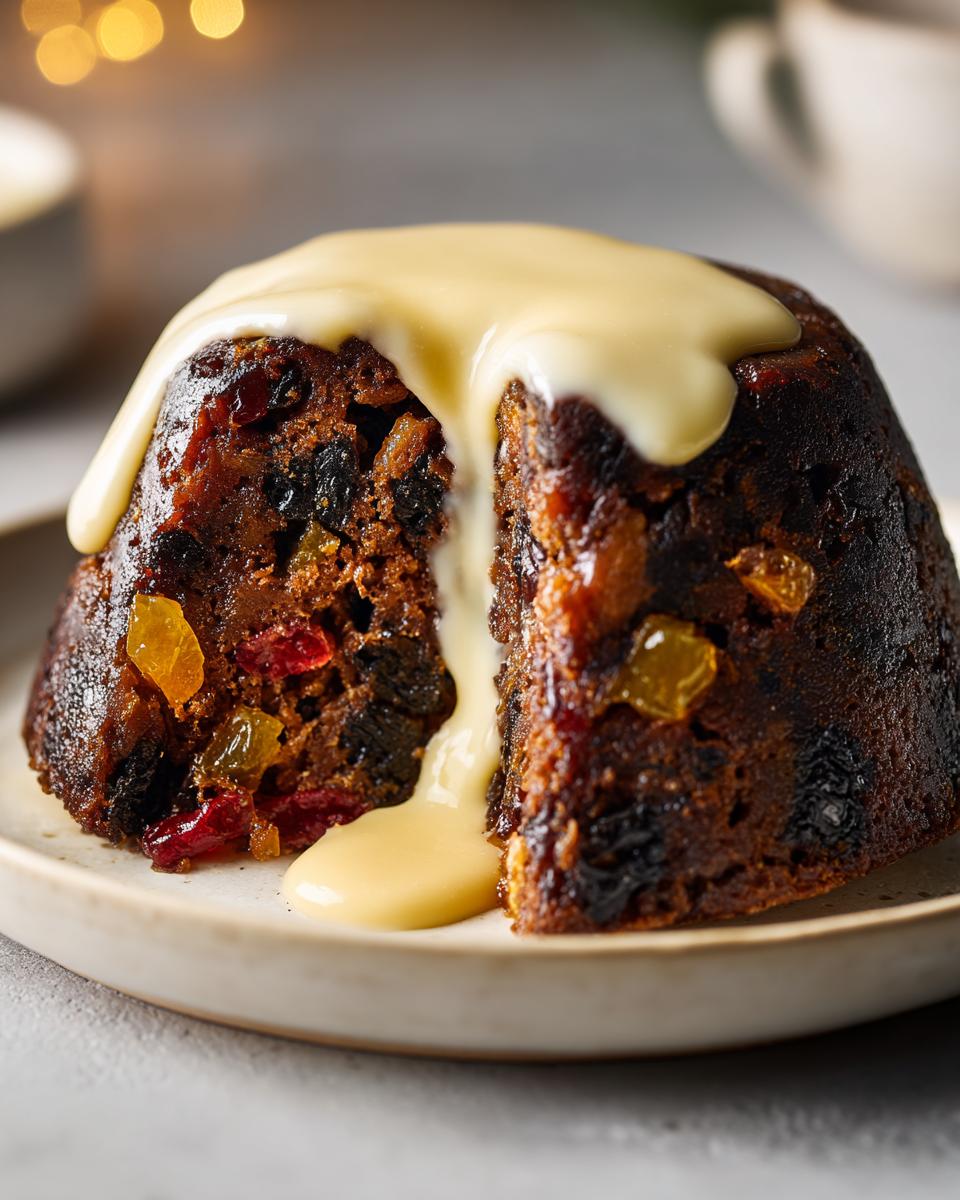
The pudding may be cooked and resting, but we aren’t done yet! We need the **Plum Pudding with Brandy Sauce**, and honestly, this sauce is half the reason we make this dessert, right? Making the brandy butter is super simple—it’s essentially magic butter cream. Make sure that 100g of butter you use is perfectly soft, not melted. You beat it with the sifted powdered sugar until it’s super smooth. I mean, light and creamy, just like a good frosting! You can check out how I get my homemade aioli just right; the creaming technique is similar.
Once you beat in the brandy and vanilla, you’re good to go! Remember, to serve, you steam the pudding again until it’s hot all the way through. Then, turn it out onto your prettiest plate. For the finale—the real showstopper—gently warm a little extra brandy, pour it over the top, and light it up! Watching that pudding burn off its booze is the absolute best way to start serving this **Festive Fruit Pudding**.
Storage and Reheating Instructions for Your Festive Fruit Pudding
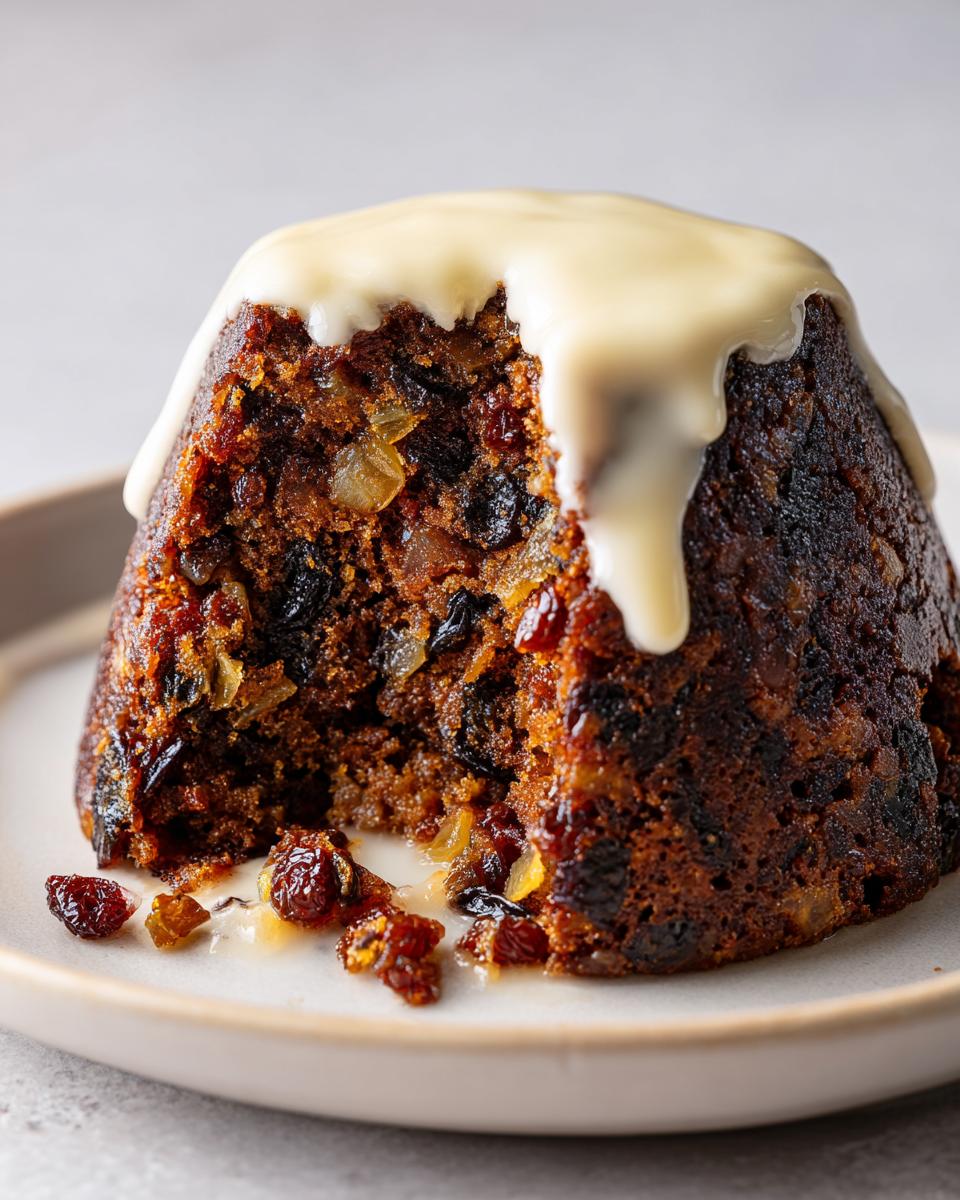
One of the best things about making a traditional **plum pudding** is that you can—and honestly, *should*—make it weeks or even months ahead of time! In fact, my nutrition training taught me that letting these rich, dense desserts age slightly actually lets those spices truly marry together. This old-school making-ahead process is why we often call it the perfect **Festive Fruit Pudding**!
Once the pudding has completely cooled down after its initial 6-hour steam, you need to wrap it up tight. I mean *really* tight. Use a double layer of plastic wrap, pressing it right against the surface of the pudding to keep air out. Then, wrap that whole thing tightly in foil. You can store it wrapped like this in the refrigerator for about three weeks, or pop it straight into the freezer for up to six months. It keeps beautifully, which is such a lifesaver when the holidays get busy!
When it’s time to eat, you simply need to reheat it. You can toss it straight from the freezer back into the slow cooker if you want, but the most traditional way is re-steaming. Just unwrap it, put it back into your greased basin, cover it with fresh parchment and foil just like before, and steam gently for about 1.5 to 2 hours until it’s hot all the way through to the very center. If you’re looking for other make-ahead festive recipes, check out my guide on making homemade jam; it shares similar preservation logic!
Tips for Serving This Victorian Christmas Dessert
When that beautifully warmed, dark **plum pudding** finally comes out of the steamer, the presentation really matters! We’ve already talked about the spectacle of flaming it with extra brandy—which is pure theater—but let’s explore the accompaniments. While that brandy butter sauce is truly heavenly, you can keep things interesting year after year by varying what you serve with it.
For a truly classic take on this **Victorian Christmas Dessert**, don’t forget the simple elegance of a good, creamy vanilla custard. It cuts through the richness of the fruit and spice perfectly. In my test kitchen work, I found that if you make a custard slightly thinner than usual, it puddles beautifully around the base of the slice. Another phenomenal, historical pairing is hard sauce—it’s basically a fluffier, slightly stabilized version of the brandy butter, often featuring lemon zest too. If you’re interested in other cozy holiday drinks to serve alongside, you might love the vibe of my coquito recipe!
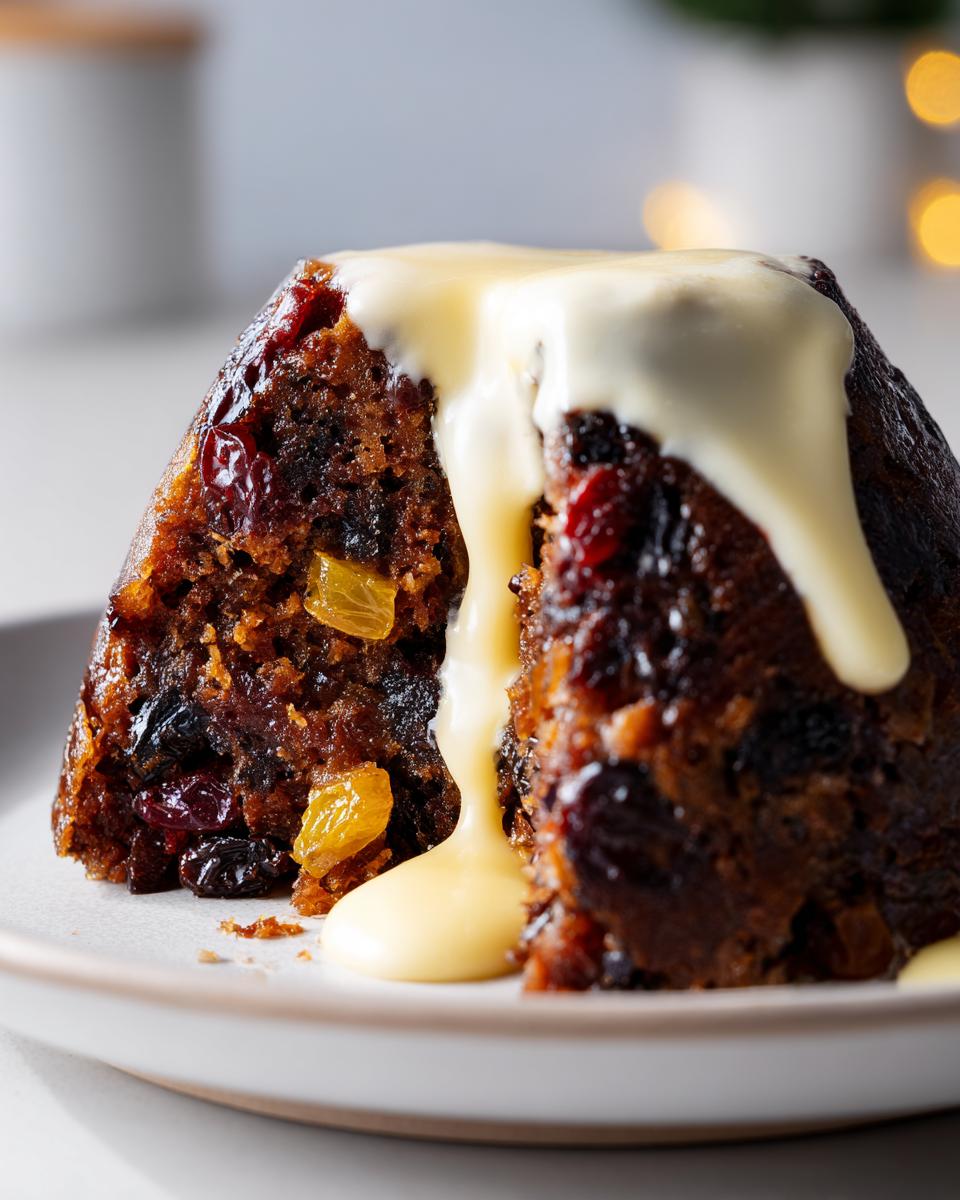
And here’s my favorite tip to lean into the tradition: the lucky coin! Years ago, bakers would hide a silver sixpence, or sometimes a threepence, inside the pudding before the final steam. Whoever got the coin in their serving was said to have good luck for the coming year! Just make sure you give everyone a good warning before they dig in, as we are aiming for good luck, not a chipped tooth! For some amazing visual inspiration on serving these traditional puddings, take a peek at this stunning example of plum pudding with brandy sauce.
Troubleshooting Common Issues with Steamed Pudding
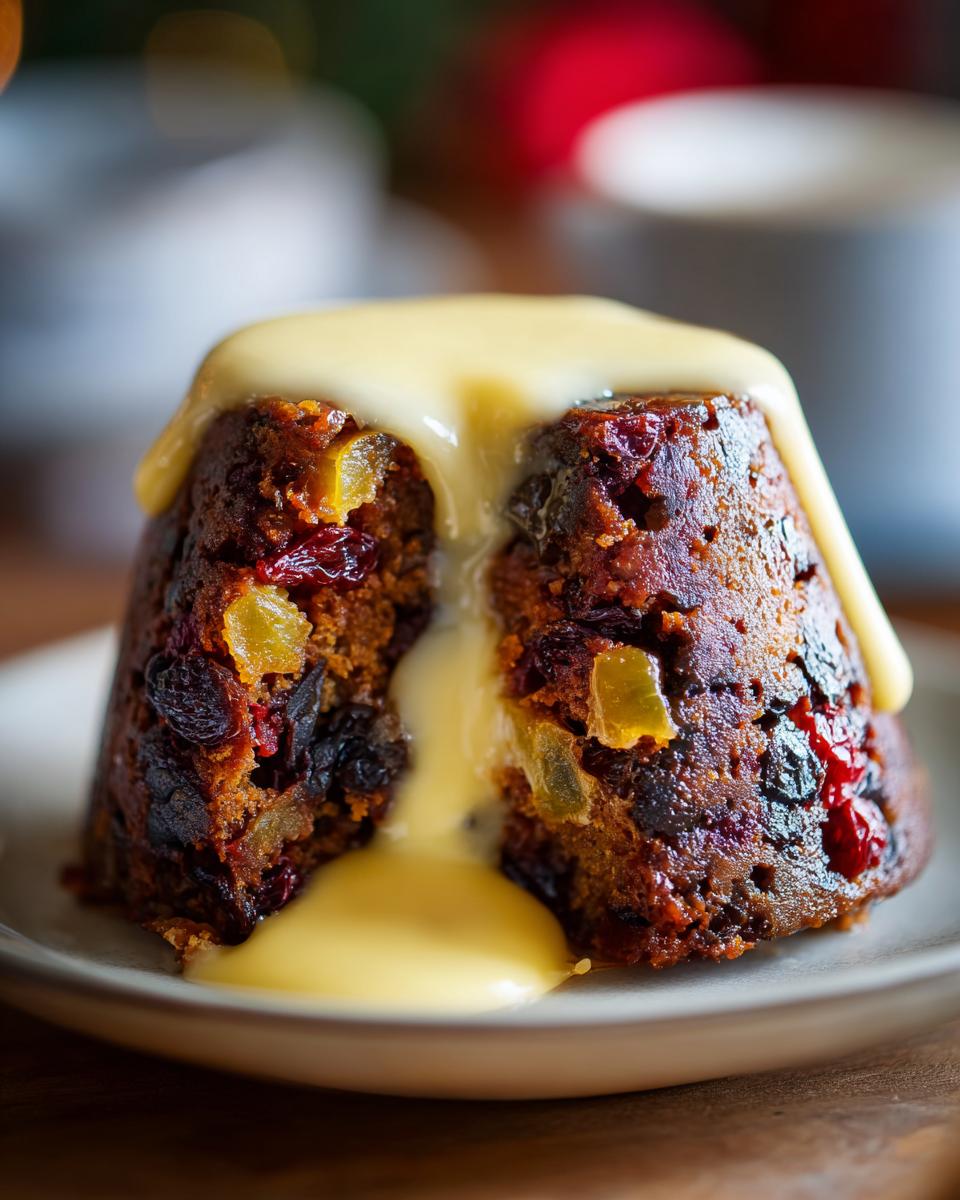
Making a traditional **plum pudding** is a labor of love, and sometimes, even when you follow the steps perfectly, things can go a little sideways! Don’t panic or blame yourself. I’ve been there plenty of times back in the test kitchen when a batch didn’t cooperate. Let’s tackle the most common snags so you can serve that gorgeous, rich dessert with confidence.
The biggest fear, I think, is the pudding sinking or coming out dry. If your pudding seems to have collapsed slightly when you took the lid off the steamer, it almost always points back to the steam itself. Remember I stressed making sure that water beneath the basin stayed at a constant, gentle boil for those six hours? If the water level drops too low, or if you let it cool down too much mid-way, the pudding doesn’t set correctly in the center, and it deflates.
For a dry pudding, go back to your fruit soak. Were your fruits plumped up enough? Also, check your fat ratio; sometimes dry suet isn’t measured quite right. If it’s cooked but feels too firm, it often means you over-mixed the flour batter initially, developing the gluten. Next time, remember the golden rule: mix the dry ingredients in super gently, just until you can’t see streaks of white anymore.
Now, let’s talk sauce. If your beautiful Brandy Butter Sauce cracks or splits while you’re beating it, it usually means the butter and sugar aren’t the same temperature, or you added the brandy too fast. If this happens, don’t throw it out! Take a spoonful of the sauce and put it in a very small bowl. Microwave that spoonful for about 5 seconds until it’s slightly soft, then slowly beat that softened spoonful back into the rest of the sauce. It usually brings it right back together! For more tips on getting creamy mixtures right, check out how I tackle homemade mayonnaise; the emulsion principles are the same!
Frequently Asked Questions About Making Plum Pudding
Can I skip the alcohol in this Traditional Plum Pudding Recipe?
Oh, yes, absolutely! While that little bit of brandy or stout gives the **Traditional Plum Pudding Recipe** its signature depth and helps preserve the fruit, you can definitely make a delicious non-alcoholic version. For the fruit soak, just use hot orange juice or even warm water mixed with a teaspoon of vanilla extract. You might miss that alcoholic kick, but the spices and molasses still create a fantastic **Festive Fruit Pudding**!
How long does the finished Plum Pudding keep?
This is where this **Classic Holiday Dessert** really shines—it’s designed to last! Once it’s completely cooled after its initial steam, wrap it very tightly, as I mention in the storage section, and it will keep beautifully in the fridge for about three weeks, or frozen for several months. That’s why people often make their **Christmas Pudding** way back in the summer! When you reheat it, you’ll be amazed at how rich and moist it still tastes.
Can I substitute fresh plums for the dried fruit mix?
For this specific **Old Fashioned Plum Pudding**, I really recommend sticking to the mixed dried fruits—raisins, currants, and sultanas. Fresh fruit has a completely different water content and structure. If you used fresh plums, you’d end up with something closer to a very dense cake or a cobbler, rather than the traditional dense, dark steamed pudding. The dried fruits are essential for that classic texture. If you love fresh plum bakes, I’d suggest trying a proper crumble recipe instead!
What’s the major difference between this and a regular cake?
The huge difference comes down to cooking method! A regular cake uses dry heat in an oven, which cooks it fast and creates a light, airy structure because the leavening agents are working quickly. Our **Traditional Plum Pudding** goes into a sealed basin and is cooked by moist heat—steam—for many hours. This slow, gentle process allows the heavy fruits and spices to tenderize beautifully, giving you that incredibly rich, dense texture that just doesn’t happen with oven baking. See what the folks over at Nanny’s Recipes say about this technique!
PrintTraditional Plum Pudding with Brandy Butter Sauce

Make this rich, moist, and traditional plum pudding, a classic holiday dessert, steamed to perfection and served with a simple brandy butter sauce.
- Prep Time: 30 min
- Cook Time: 6 hours
- Total Time: 6 hours 30 min
- Yield: 8 servings 1x
- Category: Dessert
- Method: Steaming
- Cuisine: British
- Diet: Vegetarian
Ingredients
- 175g unsalted butter, softened
- 175g dark brown sugar
- 3 large eggs, lightly beaten
- 175g plain flour
- 1 teaspoon mixed spice
- 1/2 teaspoon ground cinnamon
- 1/4 teaspoon ground nutmeg
- 1/4 teaspoon salt
- 1/2 teaspoon baking soda
- 1 teaspoon orange zest
- 1 tablespoon orange juice
- 1 tablespoon brandy (plus extra for soaking)
- 350g mixed dried fruit (raisins, currants, sultanas)
- 100g chopped suet or vegetarian suet substitute
- 50g chopped almonds or other nuts
- 50ml dark beer or stout
- 50ml milk
- Extra brandy for soaking fruit (optional)
- For the Brandy Butter Sauce: 100g unsalted butter, softened; 100g powdered sugar, sifted; 2 tablespoons brandy; 1 teaspoon vanilla extract
Instructions
- Combine the mixed dried fruit with 1 tablespoon of brandy in a bowl. Cover and let it soak for at least 4 hours, or preferably overnight.
- Grease a 1.5-liter pudding basin. Cut a circle of baking parchment to fit the base.
- In a large bowl, cream together the softened butter and dark brown sugar until light and fluffy. Beat in the eggs one at a time.
- In a separate bowl, whisk together the flour, mixed spice, cinnamon, nutmeg, salt, and baking soda.
- Gradually add the dry ingredients to the butter mixture, alternating with the orange juice and the 1 tablespoon of brandy. Mix until just combined.
- Stir in the soaked dried fruit, suet, and chopped nuts. Mix in the dark beer and milk until you have a moist, thick batter.
- Spoon the mixture into the prepared pudding basin, leaving about 2 cm of space at the top for expansion.
- Cover the basin with a double layer of baking parchment, pleated in the center, and secure it tightly with string around the rim. Create a string loop over the top for easy lifting.
- Steam the pudding: Place the basin in a large saucepan with boiling water reaching halfway up the side of the basin. Cover the saucepan tightly with a lid.
- Steam for 5 to 6 hours, checking the water level every hour and topping up with boiling water as needed.
- Once cooked, carefully remove the basin from the pan. Let it cool completely before storing it wrapped tightly in the refrigerator or freezer until needed.
- To serve, steam the pudding again for 1.5 to 2 hours until heated through.
- Prepare the Brandy Butter Sauce: Beat the softened butter and sifted powdered sugar together until smooth. Beat in the brandy and vanilla extract until light and creamy.
- Turn the hot pudding out onto a serving plate. Pour a little extra warmed brandy over the top and carefully ignite it just before serving with the brandy butter sauce.
Notes
- For a richer flavor, you can substitute some of the dried fruit with candied peel.
- If you do not have a pudding basin, you can use an oven-safe bowl that can be tightly covered.
- You can cook this rich moist pudding in a slow cooker on low for 8 hours instead of steaming.
Nutrition
- Serving Size: 1 slice
- Calories: 450
- Sugar: 55g
- Sodium: 150mg
- Fat: 20g
- Saturated Fat: 12g
- Unsaturated Fat: 8g
- Trans Fat: 0g
- Carbohydrates: 65g
- Fiber: 3g
- Protein: 6g
- Cholesterol: 80mg